

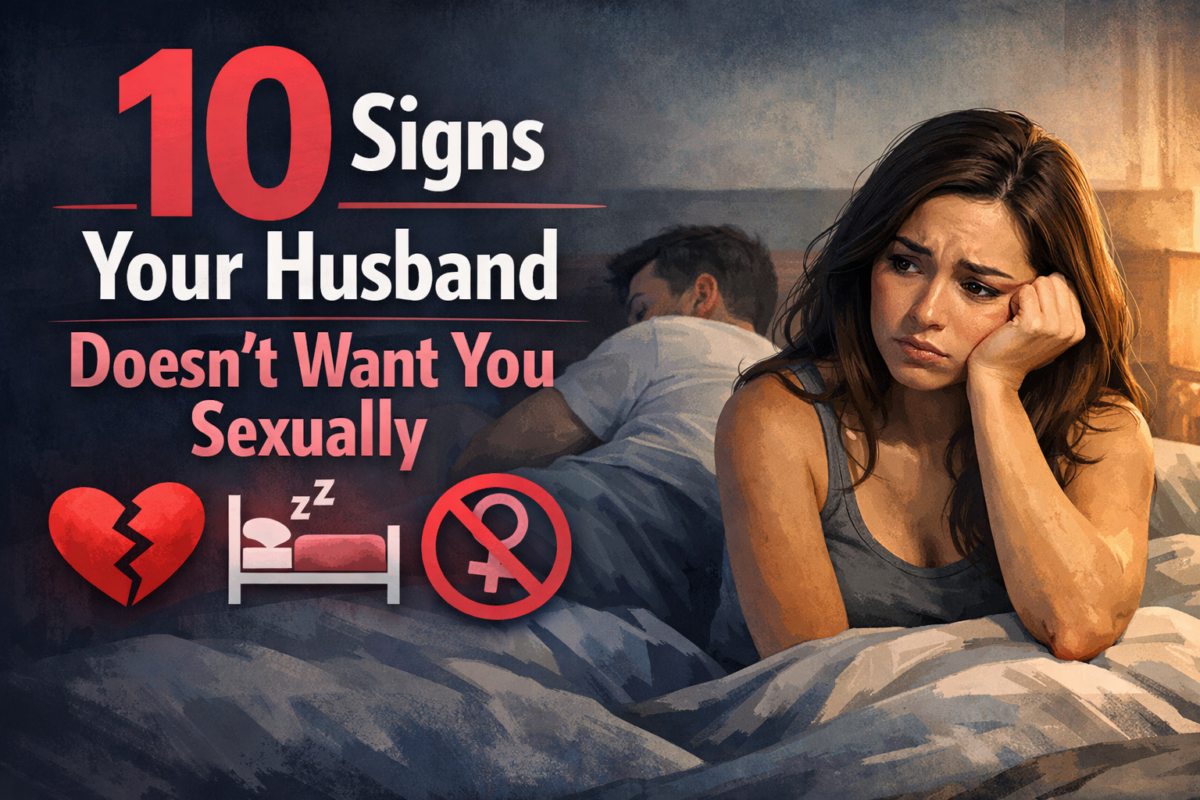
Sex is more than physical. It’s a language of connection, safety, and desire.
When a husband stops wanting intimacy, it often feels confusing and painful — not just because of the lack of sex itself, but because of the emotional meaning attached to it.
This post will help you:
- Understand the true signs of sexual withdrawal
- Separate emotional causes from physical ones
- See patterns rooted in stress, disconnection, or trauma
- Know how to respond with clarity and dignity
Let’s begin with the most important truth:
A drop in sexual desire doesn’t always mean rejection – but it does mean something is shifted in the relationship.
Learn how to break dysfunctional relationship cycles.
10 Clear Signs Your Husband May Not Want You Sexually
1. He Consistently Avoids Affection
When he turns away from:
- hugging
- kissing
- touching your arms or back
This avoidance isn’t random – it’s a sign his nervous system may be closed to connection. Physical touch is the foundation of sexual desire. When that disappears, sexuality often follows.
2. He Rarely Initiates Intimacy Anymore
Initiation is one of the most reliable signals of interest.
If texting, calling, or casual conversations start to take precedence over closeness, desire may be waning.
3. Sexual Interactions Have Become Mechanical
When sex happens, but feels:
- perfunctory
- rushed
- emotionless
…it’s a sign your husband may be going through something deeper than simple tiredness.
4. He Makes Frequent Excuses
“It’s late.”
“I’m stressed.”
“Not tonight.”
Some avoidance is normal. But consistent, repeated resistance can be a pattern of disengagement.
5. More Time in Screens, Less Time With You
If he prefers digital life (scrolling, gaming, late-night browsing) to emotional or physical closeness, this may signal:
- distraction rather than desire
- escape from difficult feelings
- avoidance of vulnerability
True intimacy requires facing feelings – not hiding from them.
6. He Shuts Down Emotional Conversations
Healthy desire flows from connection.
If your husband avoids heart-to-heart talks about:
- feelings
- dreams
- fears
- the future
…then the emotional bridge needed for sexual desire is eroding.
7. He Gets Irritated When You Try to Be Playful
Play, flirtation, and laughter are intimacy fuel.
Annoyance instead of warmth often indicates emotional distance – an inner closing off.
8. He Is Present Physically But Absent Emotionally
Maybe he shows up at home, touches you, or stays in the same room – but his heart and attention are elsewhere.
This kind of presence without connection drains sexual desire over time.
9. He Refuses Introspection or Insight
When you gently say:
- “I miss you.”
- “I feel distant from you.”
- “Can we talk about intimacy?”
…and he deflects, denies, or gets defensive – that avoidance speaks louder than words.
10. He Hasn’t Desired You in Months
Sexless periods happen. However, a long stretch without mutual desire – especially without communication about it – is a strong indicator that something fundamental has shifted.
Begin Your Journey of Healing with Undone, Unafraid
Step into a story of transformation, faith, and feminine strength. Get your copy of Undone, Unafraid: Evolving through Trauma, Betrayal, Femininity & Faith and rediscover the beauty that can rise from brokenness.
What’s Really Behind These Signs? – A Deeper Look
Sexual disinterest rarely appears out of nowhere. Here are common underlying causes:
Emotional Disconnection
Without open emotional exchange, sexual desire wanes.
Relationships thrive on safety, trust, and vulnerability — not on pressure or frustration.
Stress, Anxiety, or Burnout
Chronic stress diminishes libido in anyone.
For many men, when the nervous system is overwhelmed, desire drops significantly.
Self-Protection After Hurt
Sometimes past hurts – even unrelated to intimacy – can cause someone to build inner walls.
When the nervous system interprets vulnerability as danger, closeness becomes hard.
This is the same emotional awareness that trauma-informed coaches emphasize: protective shutdown feels safer than openness.
Unresolved Issues
Old conflicts, unspoken resentments, or unhealed wounds can quietly suffocate intimacy.
Loss of Attraction — Internal or External
This may reflect:
- personal self-esteem shifts
- midlife reevaluation
- physical or mental health changes

What to Do Next – A Path Forward, Not a Panic Button
1. Validate Your Experience
Your feelings matter – even before his explanations do.
You’re allowed to:
- feel hurt
- feel confused
- seek clarity
2. Open a Safe, Non-Accusatory Dialogue
Say something like:
“I want to understand how you’re feeling. I miss the connection we used to have.”
Avoid:
- blaming
- yelling
- ultimatums
Start with presence, not pressure.
3. Prioritize Emotional Safety First
Sexual desire often returns only when emotional safety is rebuilt.
Emotional connection comes before physical intimacy.
4. Consider Supportive Help
Talking to a couples therapist, coach, or counselor can help uncover:
- communication blocks
- emotional wounds
- fear responses
You don’t have to do this alone. Couples retreat can also help in rebuilding emotional and sexual connection.
5. Look After Your Own Well-Being
A secure, grounded self often invites healthier intimacy – whether with your partner or within yourself.
Healing or Moving On – Both Are Valid Outcomes
Rediscovering connection is possible – if both partners choose honesty, vulnerability, and presence.
But sometimes, one person’s withdrawal is a mirror of deeper incompatibilities.
Whatever path unfolds, remember:
Your worth is not tied to another person’s desire.
You deserve connection, respect, and genuine closeness.
Book a free consultation to talk about your relationship.
Frequently Asked Questions
1. Why does a husband lose sexual desire?
Common reasons include:
- emotional disconnection
- stress or burnout
- unresolved conflict
- health or psychological factors
Often, sex is a symptom of larger relational dynamics.
2. Is it normal for desire to ebb in a long-term relationship?
Yes. Desire naturally fluctuates. But when one partner consistently rejects physical and emotional closeness without dialogue, it may signal deeper issues.
3. Can this pattern be reversed?
Often, yes – but it requires:
- honest communication
- emotional safety
- mutual effort
- sometimes professional support