Categories
Uncategorized

Healing from Emotional Abuse and Neglect: The Invisible Wounds That Take Work to Repair

Quick Answer: Healing from emotional abuse and neglect requires recognizing the invisible wounds, reestablishing safety, and rebuilding your sense of self through trauma – informed approaches. This journey involves self-awareness of work, often therapy, and consistent self-care practices that address both your mind and body’s responses to past harm. 

What Emotional Abuse and Neglect Actually Do to Your System

Here’s what most people don’t understand about emotional wounds: they’re not dramatic. There’s no visible injuries. You weren’t hit, so you minimized what happened. You weren’t overtly told you were worthless   – it was communicated through endless criticism, withdrawal, or the space where affection should have been. Yet the damage runs as deep as any betrayal. 

Emotional abuse – whether it comes as constant criticism, shame, isolation, or manipulation – rewires how you see yourself. Emotional neglect does something equally damaging: it teaches you that your needs don’t matter. Both create what researchers call “invisible trauma.” Your nervous system learned to stay hypervigilant or to shut down entirely. Your sense of safety got broken in relationships that were supposed to be safe. 

This is why healing from emotional abuse and neglect isn’t just about moving on. It’s about rewiring. 

The First Step: Acknowledgment Without Minimizing

Many people who’ve experienced emotional abuse or neglect struggle with what therapist’s call “denial minimization.” You tell yourself: “It wasn’t that bad,” or “They didn’t mean it,” or “I’m overreacting.” But here’s the truth most experts agree on – your nervous system doesn’t care about intent. It responds to impact. 

Healing begins when you stop questioning whether your pain is valid. It is. Both emotional abuse and emotional neglect create lasting wounds that show up as anxiety, shame, difficulty trusting others, or disconnection from your own body. Acknowledging this – truly acknowledging it – is the foundation for everything that comes next. 

This is where understanding what is betrayal trauma becomes relevant, even if you didn’t experience betrayal in the traditional sense. Emotional abuse and neglect are betrayals of trust. Your nervous system registered them that way, and healing happens when you validate that response. 

Reclaiming Safety: The Non – Negotiable Foundation

You can’t heal from a place of ongoing threat. This is neuroscience, not philosophy. When your nervous system is still perceiving danger – whether that’s because you’re still in contact with the person who harmed you, or because trauma responses keep you in a state of hypervigilance – genuine healing stalls. 

Reclaiming safety means several things: 

Creating physical and emotional distance from ongoing sources of harm (when possible). This might mean ending contact, setting firm boundaries, or changing how you interact with the person. 

Establishing a consistent self-care practice that signals to your body that it’s safe now. These aren’t bubble baths and scented candles – though those can help. Real safety comes from things like 3 essential self – care tools for recovery: regulation practices, consistent routines, and activities that anchor you to the present moment. 

Building a support network. Healing communities are powerful for emotional trauma recovery because they signal to your nervous system that you’re not alone. Human connection, when it’s safe, is medicine. 

Rebuilding Your Sense of Self

Emotional abuse and neglect don’t just harm you in the moment – they distort how you see yourself. You may have internalized the criticism, adopted the belief that you’re unlovable, or learned to shrink yourself to avoid conflict. 

Rebuilding your identity means slowly, deliberately reconnecting with parts of yourself that got suppressed. What did you enjoy before the abuse? What are you actually drawn to, versus what you think you should be drawn to? What are your real needs – not the needs you learned to ignore? 

This work often happens in therapy, but it also happens through patient self-exploration. IFS theory offers one powerful framework for understanding the different parts of yourself that were created to survive the abuse – the parts that protected you, went numb, or learned to perform. Healing means getting to know these parts with compassion, understanding what they were trying to do, and gently helping them evolve. 

Addressing the Body’s Memory

Here’s something critical that’s often overlooked: your body remembers what your mind hasn’t processed yet. Trauma from emotional abuse and neglect gets stored as tension, disconnection, anxiety, numbness, or chronic patterns. You might notice difficulty with intimacy, an inability to relax, or the sense that your body isn’t yours. 

This is where practices that reconnect you to your body become essential. Mindfulness, somatic therapy, gentle movement – these aren’t luxuries. They’re part of genuine healing. When you learn to feel safe in your own body again, recovery accelerates. 

Realistic Expectations for Your Healing Timeline

Healing from emotional abuse and neglect isn’t linear. You’ll have breakthroughs and setbacks. Some days you’ll feel strong; other days old patterns resurface, and you’ll wonder if you’ve made progress at all. You have. 

Genuine recovery typically takes years, not months. And that’s not discouraging – it’s liberating. It means you don’t have to rush. You can move at a pace that actually feels sustainable, integrating the lessons as you go. 

Begin Your Journey of Healing with Undone, Unafraid

Step into a story of transformation, faith, and feminine strength. Get your copy of Undone, Unafraid: Evolving through Trauma, Betrayal, Femininity & Faith and for just $1.99 (limited time launch offer) rediscover the beauty that can rise from brokenness.

Frequently Asked Questions

Q: How do I know if I experienced emotional abuse or neglect? 
A: Emotional abuse involves deliberate actions meant to control, shame, or hurt you – criticism, blame – shifting, isolation, or threats. Emotional neglect means your emotional needs were consistently ignored or dismissed. Both create lasting pain and confusion about yourself – worth. If you’re questioning whether what happened was “bad enough,” it probably was. 

Q: Can you heal from emotional abuse without therapy? 
A: Therapy dramatically accelerates healing, but some people make progress through self-work, community support, and self-care practices. However, relationship therapy with a trauma – informed therapist is the most reliable path because it addresses both your thoughts and your nervous system’s responses. 

Q: What if I’m still in contact with the person who hurts me? 
A: Healing is harder – sometimes impossible – when you’re still in ongoing contact with your abuser or neglectful family member. Strong boundaries are non-negotiable. Some people need to go to no – contact; others can maintain limited contact with firm limits. Work with a therapist to determine what is safe for you. 

Q: How do I rebuild trust after emotional abuse? 
A: Trust rebuilds slowly, first in yourself (believing your own perceptions and needs), then cautiously in others. Look for people who respect boundaries, follow through on promises, and show genuine interest in your wellbeing. One trusted person is enough to start. 

Q: Is healing from emotional neglect different from healing from emotional abuse? 
A: Both create deep wounds, but the work has different flavors. Abuse survivors often need to process anger and reclaim their voices. Neglect survivors often need to learn that their needs matter. Both need to rebuild their relationship with themselves and others.

Becky Moller is a trauma-informed coach specializing in helping people heal from relational wounds and reconnect with their authentic selves through compassionate, evidence-based practices. 
Categories
Uncategorized

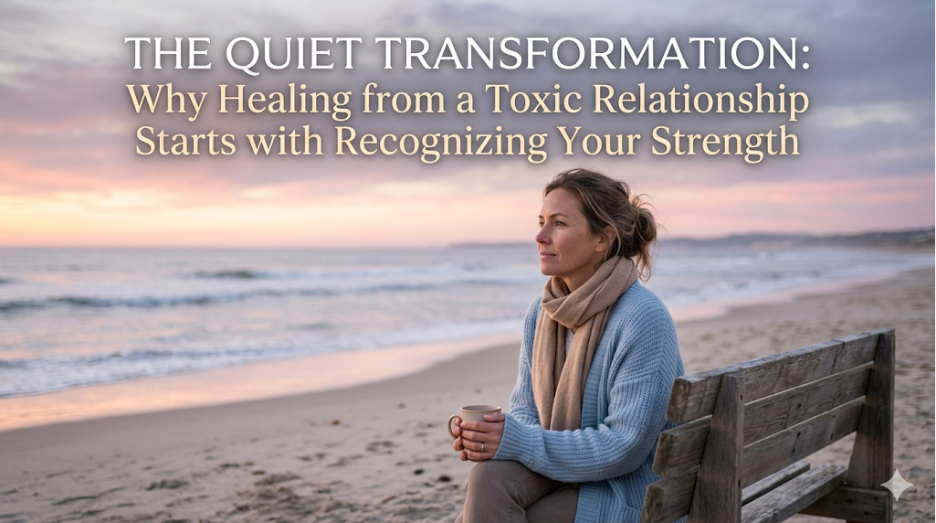
The Quiet Transformation: Why Healing from a Toxic Relationship Starts with Recognizing Your Strength

Quick Answer: You’re healing from a toxic relationship when you stop obsessing about your ex’s actions, set firm boundaries without guilt, reclaim your own interests, and experience days where the pain doesn’t dominate your thoughts. Real healing isn’t about forgetting – it’s about reclaiming yourself. 

The Truth, Nobody Tells You About Leaving

When you finally get out of a toxic relationship, there’s this moment of relief. Sometimes it’s huge. Sometimes it’s quiet. But here’s what nobody warns you about: that relief can trick you into thinking the hard part is over. 

It’s not. 

The real work starts when you’re alone, when there’s no one to blame or fix, when the adrenaline of the exit fades and you’re left with yourself. That’s when you either spiral or start to heal. If you’re in this phase right now, understanding the early signs you’re in a toxic relationship becomes crucial – because naming what happened is the first step toward moving forward. 

If you’re wondering whether you’re making progress or just going through the motions, the signs you’re healing from a toxic relationship matter. Not because they’re a checklist to complete, but because they help you see that, yes, you’re moving forward. And that’s worth acknowledging. 

You Stop Waiting for Their Approval (Or Explanation)

One of the clearest signs you’re healing is this: you stop arranging your thoughts to fit their narrative. That question that lived in your head – “Why did they do that? What did I miss?” – it finally started to fade. 

In a toxic relationship, you become a detective of their behavior, always searching for the logic that would make sense. If I just understand why, maybe I can fix it. That thought loop is exhausting. And healing means the loop breaks. 

You might still wonder sometimes. That’s human. But it no longer controls your day. You don’t rewrite conversations in the shower. You don’t craft perfect explanations they’ll never hear. You just… move on. 

And this is where recognizing signs you’re in a toxic relationship in the first place becomes valuable. Because once you understand what abuse looks like, you can stop internalizing the blame. 

Your Boundaries Don’t Come with Guilt Attached

Here’s the thing most people miss in a toxic relationship; boundaries feel selfish. Setting a limit – about time, money, attention, truth – gets weaponized against you. So, when you finally leave, your nervous system doesn’t believe boundaries are safe yet. 

Real healing from a toxic relationship happens when those changes. When you can say “no” without a three – hour explanation. When you don’t feel compelled to justify your decisions. When someone doesn’t like your boundary, and you’re… okay with that. These are the signs you’re healing from a toxic relationship that truly matter – the practical, everyday ones. 

This is hard – won. And it matters. Your boundaries aren’t negotiations. They’re not punished. They’re the fence around your peace. 

Toxic Relationship

You Can Think About Them Without Your Chest Tightening

You might run into something that reminds you of them – a song, a place, a dynamic playing with someone else. And yes, it might sting a little. But here’s the difference: it doesn’t derail your day. It doesn’t pull you back three months into despair. 

In early recovery from toxic relationship patterns, even a text notification from an unknown number could trigger a spiral. Now? Now you can see something and feel the echo of the pain without being pulled back into it. That’s not forgetting. That’s an integration. That’s your nervous system finally believing you’re safe again. 

This is one of the most significant signs you’re healing from a toxic relationship – the ability to encounter reminders without relapsing emotionally. This kind of recovery often benefits from healing communities, where you can talk through these moments with people who understand the journey. 

You Get Bored with the Story (And That’s Good)

When you’re freshly out of a toxic relationship, the story of what happened feels urgent. You need people to understand. You need to make sense of it. You tell it repeatedly, looking for the missing piece that would finally make someone – anyone – get it. 

But healing from a toxic relationship looks like losing interest in that story. Not because it wasn’t real or wasn’t devastating, but because you’ve already learned from it. And life is happening now, not back there. You’re no longer defined by what happened to you. 

You might still have moments of anger or grief. But they’re moments, not your whole existence. This shift – where the story becomes just something that happened rather than who you are – is one of the most profound signs you’re healing from a toxic relationship. 

You Actually Want Different Things (And You Know It)

Before healing settles in, you’re still negotiating with the past. Maybe I was too much. Maybe if I’d just been more patient. You’re trying to rewrite what was so that you could go back differently. 

Healing means you’ve moved past the fantasy of a rewritten history. You don’t want to go back. You understand your own worth enough to know that relationship wasn’t aligned with it – and that’s not a failure on your part. 

And when you’re ready, you can look at how to actually break relationship cycles so you don’t repeat the pattern. That awareness? That’s healing, too. 

One More Thing About Healing

It’s not linear. You’ll have weeks where you feel completely fine, then suddenly you’re crying in your car. That doesn’t mean you failed to heal from a toxic relationship. That means you’re human and you loved someone who hurt you. Both things are true. 

But the overall trajectory – that’s what matters. You’re sleeping better. You’re laughing without checking if it’s okay. You’re making decisions based on what you want, not what keeps peace. These daily wins are the real evidence that signs you’re healing from a toxic relationship are showing up. 

That’s healing. And you’re doing it. Keep going.

Begin Your Journey of Healing with Undone, Unafraid

Step into a story of transformation, faith, and feminine strength. Get your copy of Undone, Unafraid: Evolving through Trauma, Betrayal, Femininity & Faith and for just $1.99 (limited time launch offer) rediscover the beauty that can rise from brokenness.

Frequently Asked Questions

Q: How long does it take to heal from a toxic relationship? 
A: There’s no fixed timeline. Some people feel better in months; others take years. It depends on the relationship length, the type of abuse, your support system, and your own resilience. Healing from a toxic relationship isn’t about speed – it’s about consistency and self – compassion. 

Q: What are the main signs you’re in a toxic relationship? 
A: Common signs you’re in a toxic relationship include constant criticism, isolation from friends, walking on eggshells, emotional manipulation, and feeling drained after interactions. If you’re experiencing these, it’s worth evaluating whether the relationship serves your wellbeing. 

Q: Can you heal while still in contact with your ex? 
A: It’s possible, but significantly harder. Your nervous system needs to feel safe. Limited contact with a clear boundary or complete with no contact usually accelerates healing from a toxic relationship and helps you move forward faster. 

Q: Is therapy necessary for recovery? 
A: It helps tremendously, but it’s not the only path. What matters is processing the experience – whether through therapy, healing communities, journaling, or trusted friends who understand what healing from a toxic relationship truly requires. 

Q: How do I know if I’m actually healing or just numb? 
A: Healing includes feeling – sadness, anger, and grief. Numbness is flat. If you’re healing from a toxic relationship, you can access joy too. If you’re numb, everything feels distant. True healing means you’re present to life again. 

Becky Moller specializes in helping people recover from relationship trauma and betrayal, teaching women how to rebuild their lives with intention and authenticity.

Categories
Uncategorized

10 Signs Your Husband Doesn’t Want You Sexually – Hidden Red Flags & What To Do

10 Signs Your Husband Doesn’t Want You Sexually

Sex is more than physical. It’s a language of connection, safety, and desire.

When a husband stops wanting intimacy, it often feels confusing and painful — not just because of the lack of sex itself, but because of the emotional meaning attached to it.

This post will help you:

  • Understand the true signs of sexual withdrawal
  • Separate emotional causes from physical ones
  • See patterns rooted in stress, disconnection, or trauma
  • Know how to respond with clarity and dignity

Let’s begin with the most important truth:

A drop in sexual desire doesn’t always mean rejection – but it does mean something is shifted in the relationship.

Learn how to break dysfunctional relationship cycles.


10 Clear Signs Your Husband May Not Want You Sexually

1. He Consistently Avoids Affection

When he turns away from:

  • hugging
  • kissing
  • touching your arms or back

This avoidance isn’t random – it’s a sign his nervous system may be closed to connection. Physical touch is the foundation of sexual desire. When that disappears, sexuality often follows.

2. He Rarely Initiates Intimacy Anymore

Initiation is one of the most reliable signals of interest.
If texting, calling, or casual conversations start to take precedence over closeness, desire may be waning.

3. Sexual Interactions Have Become Mechanical

When sex happens, but feels:

  • perfunctory
  • rushed
  • emotionless

…it’s a sign your husband may be going through something deeper than simple tiredness.

4. He Makes Frequent Excuses

“It’s late.”
“I’m stressed.”
“Not tonight.”

Some avoidance is normal. But consistent, repeated resistance can be a pattern of disengagement.

5. More Time in Screens, Less Time With You

If he prefers digital life (scrolling, gaming, late-night browsing) to emotional or physical closeness, this may signal:

  • distraction rather than desire
  • escape from difficult feelings
  • avoidance of vulnerability

True intimacy requires facing feelings – not hiding from them.

6. He Shuts Down Emotional Conversations

Healthy desire flows from connection.
If your husband avoids heart-to-heart talks about:

  • feelings
  • dreams
  • fears
  • the future

…then the emotional bridge needed for sexual desire is eroding.

7. He Gets Irritated When You Try to Be Playful

Play, flirtation, and laughter are intimacy fuel.
Annoyance instead of warmth often indicates emotional distance – an inner closing off.

8. He Is Present Physically But Absent Emotionally

Maybe he shows up at home, touches you, or stays in the same room – but his heart and attention are elsewhere.
This kind of presence without connection drains sexual desire over time.

9. He Refuses Introspection or Insight

When you gently say:

  • “I miss you.”
  • “I feel distant from you.”
  • “Can we talk about intimacy?”

…and he deflects, denies, or gets defensive – that avoidance speaks louder than words.

10. He Hasn’t Desired You in Months

Sexless periods happen. However, a long stretch without mutual desire – especially without communication about it – is a strong indicator that something fundamental has shifted.

Begin Your Journey of Healing with Undone, Unafraid

Step into a story of transformation, faith, and feminine strength. Get your copy of Undone, Unafraid: Evolving through Trauma, Betrayal, Femininity & Faith and rediscover the beauty that can rise from brokenness.

What’s Really Behind These Signs? – A Deeper Look

Sexual disinterest rarely appears out of nowhere. Here are common underlying causes:

Emotional Disconnection

Without open emotional exchange, sexual desire wanes.

Relationships thrive on safety, trust, and vulnerability — not on pressure or frustration.

Stress, Anxiety, or Burnout

Chronic stress diminishes libido in anyone.

For many men, when the nervous system is overwhelmed, desire drops significantly.

Self-Protection After Hurt

Sometimes past hurts – even unrelated to intimacy – can cause someone to build inner walls.

When the nervous system interprets vulnerability as danger, closeness becomes hard.

This is the same emotional awareness that trauma-informed coaches emphasize: protective shutdown feels safer than openness.

Unresolved Issues

Old conflicts, unspoken resentments, or unhealed wounds can quietly suffocate intimacy.

Loss of Attraction — Internal or External

This may reflect:

  • personal self-esteem shifts
  • midlife reevaluation
  • physical or mental health changes

Signs your husband does not want you sexually

What to Do Next – A Path Forward, Not a Panic Button

1. Validate Your Experience

Your feelings matter – even before his explanations do.

You’re allowed to:

  • feel hurt
  • feel confused
  • seek clarity

2. Open a Safe, Non-Accusatory Dialogue

Say something like:

“I want to understand how you’re feeling. I miss the connection we used to have.”

Avoid:

  • blaming
  • yelling
  • ultimatums

Start with presence, not pressure.

3. Prioritize Emotional Safety First

Sexual desire often returns only when emotional safety is rebuilt.

Emotional connection comes before physical intimacy.

4. Consider Supportive Help

Talking to a couples therapist, coach, or counselor can help uncover:

  • communication blocks
  • emotional wounds
  • fear responses

You don’t have to do this alone. Couples retreat can also help in rebuilding emotional and sexual connection.

5. Look After Your Own Well-Being

A secure, grounded self often invites healthier intimacy – whether with your partner or within yourself.


Healing or Moving On – Both Are Valid Outcomes

Rediscovering connection is possible – if both partners choose honesty, vulnerability, and presence.

But sometimes, one person’s withdrawal is a mirror of deeper incompatibilities.

Whatever path unfolds, remember:

Your worth is not tied to another person’s desire.
You deserve connection, respect, and genuine closeness.

Book a free consultation to talk about your relationship.


Frequently Asked Questions

1. Why does a husband lose sexual desire?

Common reasons include:

  • emotional disconnection
  • stress or burnout
  • unresolved conflict
  • health or psychological factors

Often, sex is a symptom of larger relational dynamics.

2. Is it normal for desire to ebb in a long-term relationship?

Yes. Desire naturally fluctuates. But when one partner consistently rejects physical and emotional closeness without dialogue, it may signal deeper issues.

3. Can this pattern be reversed?

Often, yes – but it requires:

Categories
Uncategorized

Undone, Unafraid: A Journey Through Trauma, Faith & Healing

I am the mother of 5 beautiful children. These kiddos are the pride and joy of my life, and bringing each one of them into the world was a painstaking process that required my full physical, mental, emotional, and spiritual capacity. Until you’ve experienced pregnancy and giving birth, it’s hard to explain exactly what it means to hold that baby in your arms and know how much went into carrying it inside you and bringing it forward into the world.

I’m excited to share that my new book: “Undone, Unafraid: Evolving through Trauma, Betrayal, Femininity & Faith” will be launching on November 11th! And for the first 24-48 hours, you can grab it for the special rate of $1.99 USD!

UNDONE, UNAFRAID is an intimate story of betrayal trauma, and so much more: Of breaking down and through the programming of religious and relational paradigms that keep us suffering and stuck, and learning to surrender to an unexpected spiritual awakening—the dissolution of the ego self and the discovery of what awaits us beneath it.

From fear to freedom, witness the wild wisdom of true spirituality: A divine love story that will speak deeply to anyone who has known loss.

This project has been a labor of love for the past ten years of my life, and much like the birth of my beautiful children, it’s been a painstaking process that’s required my all.

The book has been through dozens of iterations, advanced readers, multiple publishers and cover designs. I’m even re-recording the Audible, which I completed a year ago and is now almost obsolete after switching publishers last fall.

Begin Your Journey of Healing with Undone, Unafraid

Step into a story of transformation, faith, and feminine strength. Get your copy of Undone, Unafraid: Evolving through Trauma, Betrayal, Femininity & Faith for just $1.99 (limited time launch offer) and rediscover the beauty that can rise from brokenness.

In short, this journey has tested my drive, commitment, willingness to sacrifice, and willingness to be seen.

Like many of us parents feel from time to time, it would have been tempting to give up on it if I hadn’t known way down deep in my gut that this is my gift to give to the world. Just like each of my own miraculous children, I believe that this book has a Higher purpose and that if I do my best to see it through, it will have a life of its own for those it is meant to serve.

I am beyond grateful for the many many people who’ve been part of it’s evolution and so proud of what it’s become.

And I can’t wait to share it with you.

My hope is that this book will speak to your journey, will inspire you to keep going when things feel hopeless, and will help you dare to believe that you, too, can create something beautiful from the wreckage of broken dreams.

Because when any one of us chooses to open our heart and take full accountability for what we’re creating there, that is the moment we change the world.

With love, gratitude, and solidarity,
Becky

Categories
Uncategorized

Some Thoughts in the Aftermath of the Utah Valley Violence

I’m writing today because after yesterday’s violence at UVU, you are on my mind, and I want to check in.

Are you doing okay? 

It’s been surreal to watch our little Utah Valley under the spotlight of the whole world. I taught at UVU for over a decade and have found myself replaying where I would have been on campus, how terrified my students would have been, how scary it would be to have to return there when classes resume next week.

One of my best friends works right on campus near the shooting and was stuck there for hours, trying to make sense of the situation as it unfolded and keep students safe. So many people I know had children or loved ones who were traumatized by being there, and just knowing how easily more people could have been harmed is a trauma in itself.

Yesterday was a day of Big-T Trauma for so many people here in Utah. And if that’s you, I want to make sure you’ve got some tools in your toolkit.

First, give yourself permission to not be okay.
It’s okay to feel whatever you feel. You don’t have to clean it up or be “fine.” What happened is a big deal and it makes perfect sense that you would be affected by it– however that’s showing up for you.

Second, make space for self-care.
Self-care is one of the most important things you can do after experiencing a trauma, and I don’t mean a spa treatment or manicure. I mean actually tending to the present needs of your mind, body, and spirit with nurturing compassion.

Trauma is stored in the body. Have you ever seen what happens when a rabbit gets chased by a dog? Once it’s made its way to safety, it will pause and shake for a moment. This is an evolutionary response to discharge the trauma or stress response that occured in the body when the rabbit was in danger.

You’re just like that rabbit, so find a way to move and release with your breath and body. Go for a walk, stand up and shake out your hands with a big exhale. Maybe find a safe, alone place and yell, scream or cry. It’s important to let the emotion move THROUGH you, rather than getting stuck. And even though it can be scary to feel, you will find that it will pass through, and you can tolerate it.

Learn to Heal Through Trauma

For anyone who has shattered, grieved, and dared to gather their pieces. Read the Book Today!

Third, reach out for support.
It’s often counterintuitive to reach out when we’re really struggling. This is true for me, too. But our own crazy thrives in the dark. Making contact with other people has research-backed benefits that go beyond what we can even understand in our logical minds. There is a spiritual dimension of being connected to safe people that grounds us in important ways that we just can’t do on our own. No matter how tempting it is to hide away, push yourself to make contact with another safe human today. Please.

There’s not one right way to deal with trauma, and as long as you’re making space for your emotions and self-care, you’re doing it right.

My prayer for us all today, is that we can allow this tragic moment to help us see more clearly the cost of our own judgment and fear. That it will motivate us to deepen our willingness to listen and allow, even when we disagree with each other. That it will break our “I know best” walls down and inspire us to acknowledge the limitations of our own humanity. In this holy grief, we can reach for that Something Higher that is all around us and within us, that Something that is big enough to hold that which is too terrible to bear alone.

May we each allow this moment to serve our collective awakening. For ourselves, for each other, for the world.

Take care of yourself today, my friend.

With so much love,
Becky

Categories
Uncategorized

Are You Aware of What You’re Creating in Your Life and Why?

Are you aware of what you’re creating in your life and why?

Alchemy is the understanding (experientially through the heart) of how consciousness relates to matter (& experience).

It’s a science that’s based in this core truth: “As within, so without” or “As above (in the unmanifested realm), so below (in the manifested realm).”

Alchemy is not about manipulating life to satisfy your ego (self-serving) desires.

Rather, it’s about growing your awareness of how your inner world (your desires and your mind) are constantly creating your outer world—whether you realize it or not.

So the question becomes: what is my heart’s deepest desire?

And can I see that this desire is what I am in actuality creating in my life right now?

And perhaps the penultimate question: At what cost? Is what I’m creating worth the cost I’m paying for it? 

What do I mean by this?

When I was in my late teens and twenties, I struggled with anorexia.

I lost my period and spent so much of my energy tracking calories and obsessing about when I would eat or exercise next.

I often felt a physical revulsion after I ate food and could sense the fat cells getting bigger on my body. This sensation felt almost unbearable.

Although I didn’t realize it at the time, my greatest desires were control and approval.

I had left home and moved across the country all by myself to go to college.

I felt a weight-ton of expectations (mostly my own) to perform and become something spectacular.

I was terrified of letting people down and had no idea what was going to happen next in my life.

Control and validation became my lived reality: a cage of suffering fueled by my own driven desire.

And I got what I wanted: I was in total control of my body and was winning a ton of validation… at the expense of everything that matters most.

My soul. My sense of joy and freedom. My relationships.

It took almost two decades of flirting with this kind of compulsive behavior before life handed me my most valuable gift—in the form of suffering great enough to wake me up to the fact that control and validation weren’t actually the pot of gold at the end of the rainbow that I thought they were…

…and I realized I could surrender those desires. I could choose to let go.

I could choose to want something different. Something more aligned with who I want to be.

I could choose to want love. I could choose to want freedom. I could choose to want to be of service to Something Greater than myself.

Waking up to my ability and my responsibility to make that choice ten years ago…

…and the ugly fact that my real desires had actually been something very different and very self-protective and self-serving…

…changed the trajectory of my entire life.

At this year’s Silent Retreat on January 18th, we are thrilled to share with you the ancient alchemy technique called “Circling the Square,” a spiritual methodology to unlock the subconscious blocks and beliefs that are keeping you from creating your deepest desires in the world…

…and the space and compassion to gently face the reality of any unconscious desires that are creating parts of your life you’d rather change.

If you’re local and ready to face what needs to change, I hope you’ll sign up for this year’s Silent Retreat in Provo, UT on January 18th.

With hope & trust in the Basic Goodness in all of us,

Becky

P.S. Becoming aware of the power of your desire in the life you’re creating is one of the greatest gifts anyone can be given! I hope you’ll take this chance to stand in your power with heart and intention…and without apology. The world needs the authentic you.

Categories
Uncategorized

Do You Struggle With Resentment?

Ten years ago, my marriage blew up and I found myself in total chaos.

For months, even a few years, my mind was often spinning with intrusive thoughts, my emotions were so big I couldn’t pull out of them, and my body was freaking out doing weird things–like waking me up at 4 in the morning or locking my spine to where I couldn’t move for days on end.

Because I knew what I was experiencing was connected to the event that had taken place in my life, I didn’t want to medicate myself.

I knew intuitively that my mind and body were reacting for a reason, and I didn’t want to numb them. I wanted to understand them, and learn how to work with them more skillfully.

This led me to a healing pathway that changed my life forever.

It started with learning the language of betrayal trauma: an actual physiological condition that mirrors PTSD and occurs when our primary attachments go from being our most trusted safe places to the source of our deepest pain.

Suddenly, my chaotic experience began to make perfect sense.

Of course I felt crazy, my body had kicked me into my limbic system–my survival brain–where the most reactive, instinctual parts of me were now behind the wheel, desperately trying to protect me 24/7.

Of course my body felt weird–I was filling it with cortisol and adrenaline day-in and day-out as I navigated an unexpected and unwelcome new reality on high alert.

Understanding trauma gave me the tools and language to not only work with the chaos in my mind and body, it gave me the foundation to start to trust myself again.

I spent about seven years in betrayal trauma recovery, eventually becoming a sponsor, presenter, administrator, and author of recovery materials.

The more I learned, healed, and observed others on similar journeys, the more obvious it became that some kind of relational trauma was almost universal—and that it’s where most people remain stuck.

I realized that without an understanding of the role trauma was playing in my experience and my reactions, I would never have been able to fully heal.

It would be like playing the game without a full deck of cards.

That’s why after seven years, I left the 12-step world of addiction and trauma recovery, and created a mindfulness-based, trauma-informed program to bring the same tools and healing principles to the world.

Because the fact is, there’s more than one kind of betrayal, and whatever kind you experience, it creates its own kind of trauma in the body that will hold you hostage for days, weeks, decades, if you don’t know how to work with it.

Your body might be holding on to a sense of betrayal from the way you were raised, from a religion, from a career gone wrong, from life itself, from God, and yes….from an intimate partner.

If you struggle with unresolved feelings of bitterness, resentment, victimhood, paranoia, numbness, or apathy that you can trace back to an event or relationship that has a tinge of betrayal to it, you’re likely dealing with a trauma you never even realized.

And you’ll be stuck until you start working with a trauma-informed toolkit.

This is why I’m offering a FREE teaching on the 5 Types of Betrayal: a 2-part Webinar Series that will help you understand common ways people experience betrayal, how you can tell if you’re still carrying trauma, and what it takes to heal from it.

I never want anyone to experience the loneliness and isolation that I went through before I found the trauma-informed tools that could actually help me.

I never want anyone to miss the beautiful journey of growth and healing that is so possible with the right framework and support.

If you or someone you know has struggled with feelings of bitterness, victimhood, or apathy and they’d like to know more, please register here to be part of this LIVE training for absolutely free.

With love and fellowship on the journey,
Becky

P.S. This training goes LIVE on Tuesday, Nov 19th & Thursday, Nov 21st at 7pm MDT/9pm ET, and if you’re not available you can watch the replay. I hope you’ll join us here!

Categories
Uncategorized

Do You Know How to Follow Your Heart?

One of my all-time favorite moments happened on a Sunday afternoon, on the soft lawn of a local park, gazing up at the golden sky as thousands of geese passed through for hours on end.

I remember just lying there in awe as flock after flock cut their way across, aligned with the southern trajectory of the snow-capped mountain peaks to the east.

How do they know where they’re going? I wondered.

At the time, I longed for so much trust to blindly follow an uncharted path, guided by nothing more than the depth and surety of my own inner knowing.

This is the kind of heart-led path I’ve been trying to follow for well over 10 years now, and it’s taken me places I never dreamed I’d go.

I’ve since authored 2 published works and my 3rd (and most vulnerable!) book is on its way to being released.

I’ve started two businesses that regularly require me to step out of my comfort zone, learn how to do things I never thought I could do, navigate conflict, and face my own limitations.

I’ve deepened and found alignment in relationships I feared were irreparable. I’ve released other relationships that no longer served.

All of these things have felt very brave, very heart-guided, and very unknown.

The old me could never have done them.

The old me was stuck in self-doubt and fear.

Stuck in conformity and playing a part and a desperate need to meet and exceed expectations.

You see, I’d experienced some major events in my life that had caused me to deeply doubt myself. To question my worth. To distrust my body and my own ability to see clearly.

I’d experienced a major betrayal — and with all the other challenges that come with having the rug pulled out from under you, the deepest one is that it often takes away your ability to trust yourself.

It took the right tools and framework, and a willingness to let myself be seen in all my messy humanity to reclaim what I saw so clearly displayed that day across the crisp autumn sky.

It took a deep, abiding trust in my Self.

Not in my personality or abilities. Not in my specialness or worthiness or some passionate story about what I deserved or anything like that.

It took a big-T Trust in the Highest and Deepest within me — the Something Higher that I could feel wanted to be expressed through me. The essence of Love that is all that I am and yet has nothing to do with me at all.

This Something is not unique to me. It’s in you, too…and every other being on the planet.

I look at my life today and feel a kinship with those beautiful birds who beckoned to me years ago, calling me to a more adventurous and fulfilling life.

Calling me to let go of my agenda and perceived notions of safety and success, to reclaim my heart, and simply follow, one mindful, surrendered step at a time.

It’s a calling for all truth-seekers, wounded warriors, maximizers, and dreamers who want to live deeper and richer.

I’m here to discover my own heart-guided journey, not to be a cog in a wheel on somebody else’s machine.

People who’ve experienced betrayals and rock-bottoms and who need the tools to find that Self-trust again—or maybe discover it for the first time ever.

Your absolute trust in your Deepest Self is the one thing that will carry you further than you ever thought you could go. There are reliable tools to find this trust within yourself and you’re worth the journey.

In love and fellowship,
Becky

P.S. I’ve been working on a special FREE training to offer some clear, digestible tools for those of you who want to better understanding you’re stuck in self-doubt and how to get more free. We’ll be going LIVE on Tuesday and Thursday, Nov 19 & 21. You can learn more and register here.

Categories
Uncategorized

IFS Theory – How to Uncover Your Protectors and Find Your Highest Self

Tomorrow is Halloween, the day we love to be scared.

According to Google Trends, you’ll likely see Shrunken Head Bob from “Beetlejuice,” Envy from “Inside Out 2”, and Red from “The Descendants” if you’re pounding the pavement with the trick-or-treaters tomorrow.

There seems to be something in the human psyche that loves to dress up and play a part.

Internal Family Systems (IFS) is a psychological theory that claims that all human beings are made up of parts: different sub-personalities that have different goals and different ways of seeing the world.

Before you poo-poo this notion, consider yourself.

Don’t you have different versions of yourself that show up in different places?

Is the part that shows up at the office the same as the part that shows up at home with the kids?

What about the part that shows up with your family-of-origin?

With your closest friends?

The more you observe yourself, the more you’ll notice the many parts that help you skillfully navigate your world.

Each has its own goals, its own behaviors, its own beliefs.

And each one developed from a deep subconscious need to protect you – to help you survive.

The parts that show up in the most protective ways are called Protectors–and these are the ones I want you to get curious about today.

Because your Protectors, although well-meaning, are likely causing a lot of chaos in your life.

Protectors can show up explosive, defensive, combative, and ready to take on the world.

They can also show up very very nice and accommodating, trying to help you fly under the radar and stay safe.

But no matter how your Protectors show up or the temporary safety they provide,

they’re also keeping you from stepping into and operating from your Highest Self–the truest and deepest part of you that is wise, capable, aligned, and guided by love.

Learning to notice and take full accountability for the way your Protectors show up is a powerful tool to help you break your patterns of self-sabotage or dysfunction in your relationships.

For a FREE PDF download, How to Uncover Your Protectors and Find Your Highest Self, follow this link:
https://beckymoller.com/free-download-uncovering-protectors-with-ifs/

Categories
Uncategorized

Do You Want More Passion & Purpose in Life?

A few weeks ago, I spent a weekend in New York City with my daughter. She’s 17, and auditioning for some of the most prestigious college dance programs out there.

We spent days with students and faculty who are out becoming change-makers, the ones in the arena, facing their fear to wear their heart on their sleeve on a daily basis and allow their very best to not be good enough—again and again.

We walked down busy streets bustling with people from every walk of life, every ethnicity imaginable. We heard dozens of languages as we sidestepped smoky sewer covers and avoided being honked at by taxi drivers.

We waited in line at a bagel shop where a Puerto-Rican twenty-something in a backwards baseball cap and apron loudly directed all the wide-eyed tourists on where to stand and how and what to order from an impressive array of colorful bagels and flavored cream cheeses stacked so high it looked like gelato.

And I never felt more sure I’d witnessed someone who was fully living their purpose.

You see, there’s something about the Big Apple, something about this district of New York. There’s a tangible energy radiating off of it.

It’s a place for dreamers.

For people so hell-bent on following their hearts that they’re actively refusing to get sidetracked by the ever-present fear that they’ll fall flat on their face.

Whether they’re first-generation immigrants risking it all for a startup bagel shop or young people like my daughter hoping to make an impact in the world through artistry and storytelling…

It’s a place for doers.

For people willing to show up and figure it out, to take risks, get creative and work their butt off as long as it feels right. As long as it feeds their soul.

It’s a place for maximizers.

For people who want more out of life than comfort. More than status quo, more than safety and security. For people who want to make life a game of potential and play it with passion.

Who dare to imagine the uncharted edges of their ability instead of how to guarantee that they will never fail, never be humiliated, never be exposed as incapable or not talented enough.

This New York energy is one that I’ve come to know in myself over the past ten years, as I’ve devoted myself wholeheartedly to my own wild frontier of spiritual healing.

This energy began to stir inside me a decade ago when I finally released the identities I’d clung to for as long as I could remember: old definitions of what it means to be a “good woman,” “good wife,” “good mother,” “good person.”

It’s one that took root through a lot of ups and downs, painful realizations, and my share of trainwrecks…until I finally understood how to find and feel my own heart, my own inner guide, my own compass.

And now, where I used to feel fear and obligation, I feel a deep trust in myself and an unwavering sense of choice in every single situation I face.

Where I used to feel anxiety and overwhelm, now I feel passion, surrender, and purpose.

Where I used to feel that I was not enough, now I feel unalterably connected to a Self-Love that has the capacity to hold all of who I am—darkness and light, strength and weakness, in endless compassion.

Soul work is not for everyone. Heaven knows it’s not easy.

But for those of us who breathe in glittery New York air and something inside us comes alive…

…It’s inevitable.

If you find yourself living below your purpose, feeling dead inside, stuck in unproductive patterns and dissatisfying relationships…

…know that a brighter future can be yours. With the right tools and framework, you can create a future as limitless and bright as the New York city skyline.

The world needs your passion, your heart, your wisdom and perspective, your most authentic Self. Don’t settle for somebody else’s definition of who you’re supposed to be.

You were born to be an unafraid, unapologetic, fully accountable, and joyfully aligned YOU. You were born to manifest the Highest within you. And with the right tools and framework, you can.

With Love on the Journey,
Becky

P.S. In January, we’re launching our new cohort for 2025: Awakening Unplugged: A Year of Self-discovery to Open Your Heart and Transform Your Pain to Purpose. Watch for more information in the coming months!